




Self-Adhesive Labels for Pharmaceuticals: Compliance, Safety, and Tracking

Stay up to date, subscribe to our newsletter!
SubscribeRFID in retail refers to the use of radio frequency identification technology to track products automatically, improve inventory accuracy, and connect physical stores with digital operations. Read more to understand how RFID works, its retail benefits, and more.


RFID in Retail has moved from an emerging innovation to a practical foundation for modern store operations. Retailers across fashion, grocery, and specialty segments are adopting the technology to gain real-time visibility, streamline processes, and support omnichannel strategies with reliable, scalable data across their entire inventory lifecycle.
Despite its growing adoption, many retailers still struggle with limited stock accuracy, disconnected systems, and manual inventory processes. These challenges directly affect sales, customer satisfaction, and operational efficiency, especially in environments where speed, availability, and consistency are critical to competing with digital-native brands and evolving consumer expectations.
RFID tags for retail address these challenges by enabling automatic identification and tracking of items on a scale. By embedding intelligence directly into products through RFID tags and labels, retailers unlock accurate data flows that support smarter decisions. Continue reading to understand how RFID works, where it delivers value, and how to start successfully. data flows that support smarter decisions.
Continue reading to understand how RFID works, where it delivers value, and how to start successfully. data flows that support smarter decisions. Continue reading to understand how RFID works, where it delivers value, and how to start successfully

RFID in Retail is built on a wireless identification technology that uses radio waves to capture data from tagged items without direct line of sight. Unlike barcodes, RFID allows multiple items to be read simultaneously, enabling faster, more accurate data collection across complex retail environments.
At its core, RFID technology connects physical products to digital systems through unique identifiers. Each tagged item communicates with readers via radio frequency, transmitting information that can be captured, processed, and integrated into inventory management and retail software platforms for real-time visibility.
This capability makes RFID retail technology especially valuable in high-volume, fast-moving retail operations. From backroom receiving to shop floor replenishment, RFID creates a continuous data loop that reduces manual intervention, improves accuracy, and supports more agile, data-driven retail decision-making.
RFID in Retail relies on several core components working together to enable seamless data capture and communication. Each element plays a distinct role in ensuring reliable identification, data transmission, and integration with retail systems that support inventory accuracy and operational efficiency.
| Component | Description | Role in Retail |
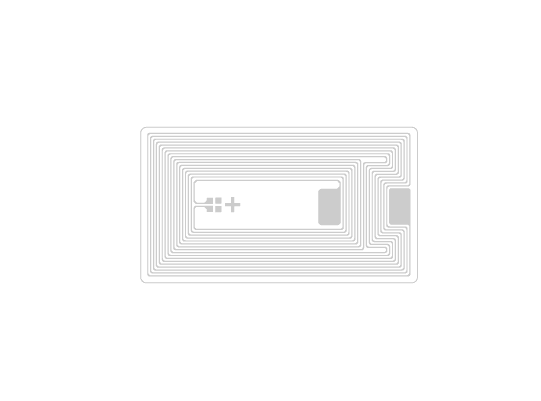
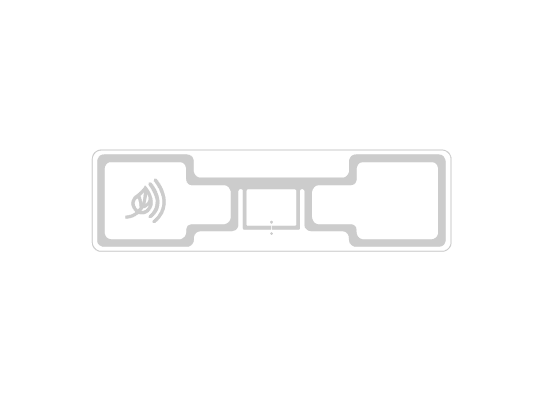
| Tags or Labels | Small devices containing a chip and antenna | Store unique product data and attach directly to items |
| Readers | Fixed or handheld devices | Capture data from multiple tags simultaneously |
| Antennas | Integrated or external components | Transmit and receive radio signals between tags and readers |
Together, these components enable RFID inventory management at scale. In retail environments, the quality and design of RFID tags and labels are especially critical, as they must perform reliably across different materials, packaging types, and store conditions.
Learn more about RFID in our blog:
RFID Tag Types (UHF, HF, LF): Which One to Choose for Your Application
What are RFID Tags? Understanding Their Function and Uses
How RFID Tags Work for Inventory Tracking
RFID in Retail works by assigning a unique digital identity to each product through an RFID tag or label. When items move through the supply chain or store environment, RFID readers automatically capture their presence, location, and status without requiring manual scanning or direct visibility.
In practical retail operations, RFID readers can be installed at key points such as distribution centers, store entrances, fitting rooms, or used via handheld devices by store associates. This flexibility allows retailers to collect accurate inventory data during receiving, replenishment, cycle counts, and loss prevention activities.
The collected data is then transmitted to retail systems, where it supports real-time inventory updates, analytics, and operational workflows. By automating data capture, RFID for retail stores reduces human error, increases speed, and creates a consistent source of truth across channels and locations.
RFID in Retail delivers value across the entire retail ecosystem, from supply chain visibility to in-store execution. By improving data accuracy and process efficiency, RFID enables retailers to operate with greater confidence, responsiveness, and scalability in increasingly complex omnichannel environments.
The following benefits illustrate how RFID retail technology directly impacts daily retail operations. These advantages are already being realized by global brands using RFID tags and labels designed for mass-market and retail applications, including solutions developed by specialized partners like Beontag.
RFID in Retail significantly improves inventory accuracy by enabling frequent, automated counts across stores and distribution centers. Brands using RFID consistently report accuracy levels above 95%, compared to much lower figures with manual or barcode-based processes, directly reducing out-of-stock situations.
For example, apparel and footwear retailers highlighted in Beontag case studies use RFID to ensure the right sizes and styles are available on the shop floor. Accurate inventory data allows faster replenishment, better allocation, and improved on-shelf availability, directly supporting sales performance.
Traditional inventory counts can take days and disrupt store operations. RFID in Retail enables full store inventory counts in hours or even minutes using handheld readers, allowing associates to focus more on customers instead of manual scanning tasks.
Retailers featured in Beontag’s cases demonstrate how RFID inventory management reduces labor costs while increasing count frequency. More frequent counts mean fresher data, faster issue detection, and better alignment between physical stock and system records across all retail locations.
RFID in Retail plays a critical role in enabling a true single view of stock across physical and digital channels. Accurate, real-time inventory data supports services like buying online, pick up in store, ship from store, and endless aisle experiences.
In omnichannel retail environments, brands using RFID tags can confidently promise product availability to customers. Beontag-enabled RFID solutions help ensure inventory data remains consistent across systems, reducing canceled orders and improving fulfillment reliability.
RFID in Retail enhances the in-store customer experience by empowering associates with accurate product information. When staff can quickly locate items, check availability, or suggest alternatives, customer satisfaction and conversion rates increase significantly.
Retailers using RFID for retail stores also leverage the technology to support smart fitting rooms and assisted selling experiences. These use cases, seen in Beontag-supported projects, help bridge the gap between physical stores and the personalized service customers expect from digital channels.
Shrink remains a major challenge for retailers, and RFID in Retail adds a powerful layer of visibility. By tracking item movements and identifying discrepancies quickly, retailers can detect losses earlier and reduce shrink-related costs.
Several Beontag retail cases highlight how RFID tags support loss prevention strategies without compromising customer experience. Unlike traditional security tags, RFID labels can combine identification and protection, supporting both inventory accuracy and shrink reduction initiatives.
Check out all Beontag’s use cases.
RFID in Retail represents a fundamental shift from manual, labor-intensive inventory methods. Traditional approaches, such as barcodes and manual counts, rely heavily on human intervention and line-of-sight scanning, which increases the risk of errors and limits data freshness.
In contrast, RFID inventory management automates data capture and enables continuous visibility. Retailers gain faster insights, higher accuracy, and greater operational agility, especially in environments with high SKU counts, frequent replenishment, and omnichannel fulfillment requirements.
| Aspect | RFID in Retail | Traditional Methods |
| Data Capture | Automatic, bulk reading | Manual, one-by-one scanning |
| Inventory Accuracy | Typically above 95% | Often below 70–80% |
| Speed | Minutes or hours per store | Days for full counts |
| Labor Dependency | Low | High |
| Omnichannel Support | Strong | Limited |
While traditional methods may appear less complex initially, RFID retail technology delivers long-term operational and financial benefits. As retail operations scale, the efficiency gains and data reliability of RFID become increasingly critical.
RFID in Retail supports a wide range of applications across different retail segments. Its flexibility allows brands to adapt technology to their specific operational challenges, product categories, and customer experience goals while maintaining consistent data standards.
The following use cases reflect applications commonly discussed in retail industry analysis and each example demonstrates how RFID creates measurable value when aligned with clear operational objectives.
Fashion retailers were among the earliest adopters of RFID in Retail due to high SKU complexity and size variations. RFID enables precise tracking of garments from production through the store, ensuring better availability of styles, colors, and sizes.
Beontag case examples show how apparel brands use RFID tags and labels designed for textiles to improve stock accuracy and support omnichannel fulfillment. This results in higher sell-through rates and fewer lost sales due to missing inventory.
See the full use case with Temera for Dolce&Gabbana.
In grocery retail, RFID in Retail supports inventory visibility for high-value, fast-moving, or regulated products. When combined with omnichannel strategies, RFID helps supermarkets manage click-and-collect, dark stores, and rapid replenishment models.
Retailers exploring RFID for retail stores in grocery environments benefit from improved traceability and reduced waste. Durable RFID labels enable consistent performance across packaging types and cold-chain conditions.
See the full use case for Blockstore Group.
Specialty and big-box retailers use RFID in Retail to manage large assortments and bulky items. RFID simplifies inventory counts in expansive store layouts and improves accuracy for high-value products like electronics or sporting equipment.
Beontag-supported implementations highlight how RFID inventory management enhances availability and reduces operational friction. Accurate data supports better merchandising, space planning, and customer service in complex retail formats.
See the full use case for Oxford.
Emerging self-checkout and cashierless models increasingly rely on RFID in Retail to identify products automatically. RFID enables frictionless shopping experiences by reducing reliance on barcode scanning and manual intervention.
While these concepts require broader system integration, RFID tags and labels remain a foundational component. Retailers experimenting with autonomous stores benefit from the scalability and reliability of RFID retail technology.
See the full use case for Mini Smart Ahonkylä.
Security is a common concern when discussing RFID in Retail, particularly regarding data privacy and unauthorized access. Modern RFID systems are designed with multiple security layers that limit data exposure and ensure controlled access to information.
RFID tags used in retail typically store limited product identifiers rather than sensitive customer data. This design reduces risk while still enabling robust inventory tracking and operational insights across the retail ecosystem.
According to industry analysis, RFID security can be further enhanced through encryption, access controls, and proper system configuration. When implemented responsibly, RFID retail technology is considered secure and compliant with retail data protection standards.
Check out all you need to know about RFID tags and security.
RFID in Retail is more than an inventory tool; it is a data foundation for modern retail transformation. Accurate, real-time product data enables advanced analytics, demand forecasting, and smarter decision-making across the organization.
As retailers seek to personalize experiences and optimize operations, RFID inventory management provides the reliable input needed for automation and artificial intelligence initiatives. Data-driven retail strategies depend on accurate physical-world data.
By connecting products, stores, and systems, RFID retail technology supports continuous improvement. Retailers gain the visibility required to respond faster to market changes and evolving customer expectations.
Starting with RFID in Retail requires a structured approach focused on business objectives rather than technology alone. Successful implementations align operational goals, product characteristics, and partner expertise to deliver measurable results.
Retailers that approach RFID strategically often begin with targeted initiatives, gradually expanding as value is proven. The following steps outline best practices for building a scalable RFID foundation.
A pilot project allows retailers to validate RFID in Retail within a controlled environment. By selecting a specific category, store group, or process, brands can measure impact and refine workflows before scaling.
Pilots supported by experienced RFID partners help identify tag performance requirements and operational adjustments early. This reduces risk and accelerates broader adoption across the retail network.
Choosing the right RFID tags and labels is critical to success. Materials, product types, and environmental conditions all influence tag performance and durability in retail settings.
Beontag specializes in RFID tags and labels engineered for mass-market and retail applications. A tailored tagging strategy ensures reliable reads, consistent data quality, and seamless integration into existing retail operations.
RFID in Retail is most effective when supported by a strong ecosystem of partners. This includes tag and label specialists, system integrators, and software providers working together toward shared objectives.
While Beontag focuses exclusively on RFID tags and labels, its solutions are designed to integrate easily into broader RFID infrastructures. Collaboration across partners ensures scalability, performance, and long-term success.
If you need an expert to get started, contact Beontag!
RFID in Retail success starts with reliable, high-performance tags and labels. Beontag brings deep expertise in developing RFID solutions tailored to retail environments, supporting global brands across fashion, grocery, and specialty retail segments.
With a focus on RFID tags and labels, Beontag’s full portfolio ensures products are engineered for performance, scalability, and sustainability. Its solutions integrate seamlessly into existing RFID infrastructures without forcing changes to retailer systems.
If you are exploring RFID for retail stores or looking to scale an existing initiative, Beontag can support your journey with proven expertise and retail-focused innovation. Contact Beontag to discover how the right RFID foundation can transform your retail operations.