



Blog
RFID or Barcode? How to Choose the Right Technology for Each Use Case

Subscribe to our newsletter!Stay up to date, subscribe to our newsletter!
SubscribeBlog
RFID tags are small devices using radio waves to identify and track objects without direct contact. They power applications from inventory to payments. Discover how they work, their types, benefits, and uses in Beontag’s full guide.


RFID tags have become an essential part of modern tracking technology, revolutionizing how businesses manage inventory, assets, and data. From supply chain management to contactless payments, these smart labels are reshaping industries by providing faster, more accurate, and automated identification solutions.
Despite their widespread benefits, RFID technology raises important questions. How does it really work? Can you be tracked with an RFID tag? Is it secure for credit cards or anti-theft purposes? Understanding these aspects is crucial for leveraging RFID applications effectively while addressing privacy and operational concerns.
In this article, you will discover what RFID tags are, how they operate, their different types, and where they are used across industries. We will also explore benefits, challenges, and future trends.
Keep reading to understand RFID technology in depth and learn how it can enhance your operations today.
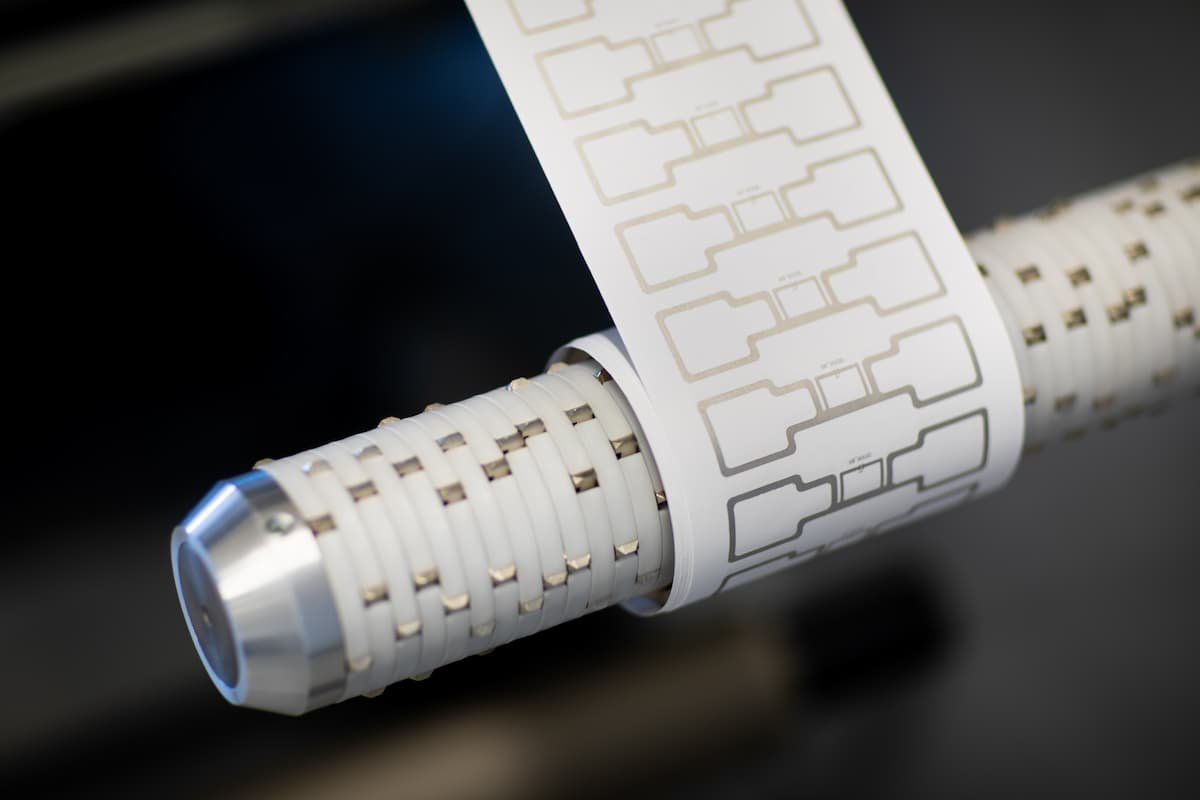
These tags are small devices combining a microchip, antenna, and substrates that enable object identification within RFID systems. These labels, sometimes called smart labels, support inventory management, supply chain management, and asset tracking without line-of-sight. They are core identification technology, linking physical items to digital systems efficiently.
RFID tags play a key role in logistics solutions, enabling quick scanning of many items simultaneously and improving barcode technology limitations. This tracking technology allows object tracking even inside containers or packaging. These smart labels enhance data transmission and operational workflows in diverse environments.
This technology is integrated with IoT applications, enabling real-time monitoring and contactless payments. As part of RFID systems, they communicate with RFID readers, automating tasks like asset tracking and supply chain management. Their seamless operation helps modernize logistics and identification technology across industries.
RFID technology uses electromagnetic coupling and radio waves for contactless identification. An RFID reader emits a radio signal that powers the RFID tag’s microchip. The tag modulates this signal to send back its stored data. This wireless system eliminates manual scanning and supports tracking technology in many sectors.
In smart labels and RFID systems, data transmission occurs through radio frequency interactions. RFID technology enables fast, hands-free scanning, unlike barcode technology. Through this identification technology, organizations optimize inventory management and achieve seamless IoT applications and logistics solutions.
RFID technology supports supply chain management enhancements by enabling rapid tracking and reducing human error. It creates scalable identification systems, harmonizing with existing asset tracking software to integrate object tracking and supply chain visibility across global operations.
Check out some of our Cases involving RFID tags and its technology:
Revolutionizing Tire Manufacturing with RFID Technology: Beontag & Michelin Partnership
Fully integrated RFID environment is a reality at Oxford and a model for the market
Revolutionizing Luxury Fragrance with RFID Technology at Culti Milano
When a reader transmits radio waves, passive RFID tags harvest energy to activate their chip. That chip uses backscatter modulation to reflect and encode information. Active tags, by contrast, use onboard batteries to broadcast. Semi-passive tags rely on both internal power and reader signals for operation.
Once activated, RFID tags send unique identifiers to the RFID reader, which transfers data for inventory management or identification purposes. This process supports tracking technology in diverse settings and enhances object tracking workflows. The bidirectional data transmission occurs wirelessly, offering superior operational visibility.
In essence, RFID tags enable automated asset tracking and supply chain management. The RFID reader decodes the data and integrates with backend software, enabling real-time inventory tracking and logistics solutions. This reduces reliance on barcode technology and simplifies data capture.
There are three main types of RFID tags—active, passive, and semi-passive—each designed for specific applications and environments. They differ in power source, range, cost, and capabilities. Understanding these variations is key to choosing the right solution in RFID applications.
Active RFID tags have an internal battery, allowing them to broadcast signals continuously without relying solely on the reader’s energy. They offer long-range communication, sometimes over 100 meters, and are ideal for:
These tags are perfect for RFID applications that demand constant data transmission and real-time visibility.
Passive RFID tags have no battery; they draw energy from the reader’s radio waves. They are cost-effective, compact, and widely used in high-volume applications such as:
They have a shorter range, usually a few meters, but their low cost makes them ideal for large-scale deployments.
Semi-passive RFID tags, also called battery-assisted passive tags, have a battery to power the chip but rely on the reader’s signal to transmit data. They are well suited for:
This type combines the extended features of active tags with the energy efficiency of passive tags.

RFID tags are used in a wide range of industries to improve efficiency, accuracy, and security. They automate tracking processes, reduce manual errors, and provide real-time visibility. Common applications include:
From retail shelves to industrial logistics, RFID technology allows businesses to locate and identify assets instantly, streamlining operations and improving customer service.
See more applications for RFID tags available on Beontag’s catalog:
Yes, in fact, they are often used in loss prevention. These smart labels or hard tags trigger alarms when passing exit readers, serving as anti-theft tools. Integrating with inventory management systems, they help deter theft and enhance stock control through tracking technology.
Beyond retail, anti-theft uses extend to asset tracking in enterprise environments. Semi-passive or passive tags on high-value equipment raise flags when moved without authorization. This identification technology adds a layer of security in logistics solutions.
When evaluating identification technologies, it’s important to compare RFID tags with barcodes and NFC. Each offers unique capabilities in range, speed, and data handling, making them suitable for different applications. The table below highlights their main differences to help you choose the most efficient solution for your specific needs.
| Feature / Technology | RFID Tags | Barcodes | NFC |
| Reading Method | Wireless radio waves, no line-of-sight required | Optical scan, requires line-of-sight | Wireless radio waves, very short range |
| Range | From a few centimeters to over 100 meters (depending on type) | A few centimeters | Usually up to 10 cm |
| Speed | Can read multiple items at once | Reads one item at a time | Reads one device or tag at a time |
| Durability | Can be embedded, resistant to dirt, moisture, and damage | Prone to wear, fading, and damage | Durable if protected inside devices/cards |
| Data Capacity | Stores more data, can be updated | Stores limited, fixed data | Stores small amounts, can be updated |
| Common Uses | Inventory management, asset tracking, supply chain, anti-theft, contactless payments | Product labeling, pricing, retail checkout | Contactless payments, ticketing, secure access |
| Cost | Generally higher than barcodes, varies by type | Very low | Similar to RFID, it varies by application |
RFID technology delivers significant advantages for businesses and organizations seeking efficiency, accuracy, and visibility in their operations. By automating identification and tracking processes, it reduces manual work, speeds up data collection, and supports better decision-making. Below are the key benefits that make RFID a valuable solution across industries.
RFID technology enables the rapid, simultaneous scanning of multiple items without line-of-sight. This reduces manual labor and accelerates processes in inventory management, supply chain management, and logistics. Businesses save time, reduce human error, and improve productivity with this advanced tracking technology.
By automating data capture, RFID systems ensure higher accuracy compared to barcode technology. The technology minimizes input errors, provides real-time data, and supports reliable decision-making. RFID applications in logistics solutions, smart labels, and IoT applications help maintain consistent and trustworthy identification records.
RFID tags are designed to endure harsh environments, from extreme temperatures to moisture and impact. Passive tags, hard tags, and inlays adapt to retail, industrial, or outdoor use. This durability supports long-term asset tracking and inventory management, ensuring dependable performance in various RFID applications.
RFID tags may generate excessive data—often called data flooding—that requires filtering by middleware to be meaningful. Managing this data properly is vital for effective inventory and asset tracking systems.
Standardization remains a challenge: frequency bands vary globally, complicating international RFID systems. Cross-border supply chain management must consider RFID frequency compatibility to ensure seamless operations.
Although RFID technology presents challenges such as environmental resistance, data management, and reading accuracy, innovative solutions are already addressing these issues. Beontag has managed to overcome limitations and expand RFID applications across demanding industries. Real-world cases illustrate how targeted innovation turns these concerns into opportunities.
In the furniture industry, for example, a manufacturer facing shipment errors and slow manual checks implemented a custom RFID system capable of scanning up to 300 parts per pallet in seconds. In the tire sector, ultra-resistant tags were engineered to endure heat, pressure, and wear, enabling traceability throughout the entire lifecycle—from production to recycling. Check out more about this case with Florence.
Advances in IoT applications are integrating RFID tags into connected systems for real-time asset tracking and predictive analytics. The merging of RFID and IoT applications streamlines inventory management and logistics solutions.
Emerging trends include AI-powered RFID systems that optimize tracking through intelligent data analysis, and blockchain integration for secure, tamper-proof identification. These innovations will transform RFID applications and enhance tracking technology integrity.
As RFID technology evolves, organizations can leverage enhanced RFID applications for smarter inventory, safer contactless payments, and more reliable asset tracking, solidifying RFID’s role in modern identification systems.
Explore The Future of RFID Technology with Beontag
Discover our range of RFID tags tailored for diverse needs—from passive smart labels to active solutions for real-time asset tracking. Empower your operations with Beontag’s reliable RFID technology whether for inventory management, supply chain optimization, anti-theft, or IoT applications. Visit our catalog or contact us now for personalized solutions.