
What Is an RFID Chip? Learn How It Works and How It Differs from RFID Tags and Labels

Subscribe to our newsletter!Stay up to date, subscribe to our newsletter!
SubscribePET vs Glassine Liners comes down to efficiency, durability, and sustainability. PET liners deliver speed and precision, while Glassine offers cost advantages and recyclability. Keep reading to explore more details and applications with Beontag’s expertise.


Label production has become increasingly complex as brands demand efficiency, quality, and sustainability from their packaging solutions.
At the core of pressure-sensitive labels lies the liner, a substrate that may not be visible to end consumers but plays a crucial role in the entire converting and application process.
The choice between PET vs Glassine Liners has emerged as one of the most discussed topics in the labeling industry.
PET liners promise exceptional performance at high speeds, while Glassine liners are praised for their cost-effectiveness and environmental profile.
However, choosing the right liner requires a deeper understanding of their differences.
Beontag helps companies navigate this choice by delivering reliable, sustainable, and innovative solutions.
Keep reading to see how Beontag’s expertise can guide your liner strategy.
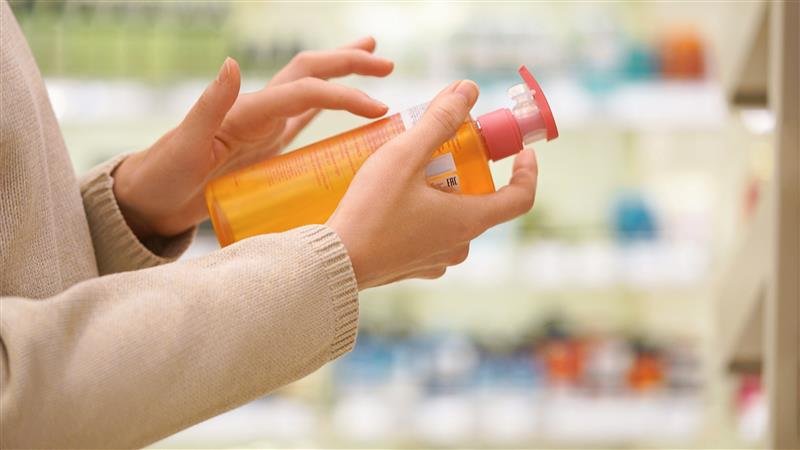
Pressure-sensitive labels consist of multiple layers, with the liner serving as the carrier that supports the adhesive-coated face stock.
Once the label is applied, the liner is discarded, but its role during production and application is critical.
Liners determine machine compatibility, waste management, and converting performance.
When discussing PET vs Glassine Liners, it is important to first define what these materials are and why they matter.
Each liner type has distinct properties that directly influence speed, waste, and die-cutting performance.
PET (polyester) liners are plastic-based films designed to provide strength and dimensional stability.
Their smooth, thin surface allows for more labels per roll and ensures high compatibility with automated, high-speed systems.
PET liners are valued for their resistance to moisture and tearing, making them reliable across complex supply chains.
Glassine liners are paper-based materials that undergo a super-calendering process to achieve smoothness and density.
Known for their affordability and recyclability, Glassine liners are widely used in standard labeling operations.
While they may not match PET in durability, they remain popular for general-purpose applications due to their balance of performance and cost-efficiency.
Understanding these differences provides the foundation for evaluating PET vs Glassine Liners in terms of speed, waste management, and die-cutting performance.
See Beontag’s full portfolio for Release Liners.
Polyester-based PET liners have become increasingly important in modern labeling due to their ability to support high-speed operations and demanding industrial requirements.
This section explores the specific qualities that make PET liners stand out.
PET liners are engineered from polyester film, known for its dimensional stability and smooth surface.
This gives PET liners superior release consistency, enabling precise label application even under demanding conditions.
Their plastic structure makes them thinner than paper, reducing overall roll diameter and increasing the number of labels per roll.
From a structural standpoint, PET liners are highly resistant to moisture, temperature variations, and tearing.
These attributes ensure reliability throughout the supply chain, minimizing downtime in label application systems.
For industries requiring consistent performance under challenging conditions, PET liners deliver confidence.
By comparing PET vs Glassine Liners, it becomes clear that PET’s unique material properties make it especially suited for automation, high-speed dispensing, and environments where stability is non-negotiable.
One of the most notable strengths of PET liners is their compatibility with high-speed die-cutting equipment. PET’s smoothness and tensile strength allow for sharper, cleaner cuts, reducing waste during production.
Converters experience fewer web breaks and less downtime, directly improving operational efficiency.
As brands adopt faster labeling lines to meet growing demand, PET liners ensure the converting process keeps pace.
The result is higher throughput without compromising accuracy. Beontag leverages PET liners in industries where precision labeling at scale is mission critical.
This efficiency is particularly relevant when evaluating PET vs Glassine Liners, as PET continues to outperform in applications where speed and accuracy dictate profitability.
Durability is another hallmark of PET liners. Their resistance to tearing reduces risk during transportation, storage, and machine loading.
Operators can handle rolls with confidence, knowing PET will maintain integrity even in fast-paced environments.
The handling benefits extend beyond durability. Because PET liners are thinner, they reduce roll weight and allow more labels per roll.
This means fewer roll changes during production, saving time and labor costs. Beontag integrates these advantages into client solutions, ensuring efficiency across operations.
In the PET vs Glassine Liners comparison, PET’s durability gives it an edge in industries with demanding logistics and high-speed labeling requirements.
Glassine liners remain a cornerstone of the labeling industry thanks to their affordability, recyclability, and consistent performance in standard operations.
This section introduces the main qualities that make Glassine liners widely used for businesses seeking reliable everyday labeling solutions.
Glassine liners are made from paper that is super-calendered to achieve a dense, smooth surface.
This process provides excellent release properties and dimensional accuracy for standard labeling applications.
Glassines remain popular due to its natural feel, recyclability, and affordability.
As a paper-based material, Glassine is more susceptible to moisture and tearing compared to PET.
However, its balance of smoothness and thickness makes it suitable for a wide range of labeling operations where extreme durability is not essential.
In the discussion of PET vs Glassine Liners, Glassine holds its ground as a versatile, low-cost alternative for many general-purpose applications.
Glassine liners perform well in traditional die-cutting processes. Their paper composition offers consistent cutting, though they may not achieve the same precision as PET liners in high-speed scenarios.
For converters operating at moderate speeds, Glassine provides dependable results without unnecessary costs.
While PET may dominate in demanding environments, Glassine remains an industry standard for mainstream applications.
Many businesses continue to rely on Glassine liners due to their familiarity and reliable performance in everyday use.
Beontag continues to innovate with Glassine liners, making them a sustainable option for brands balancing cost and quality.
Cost-efficiency is a primary reason many companies select Glassine liners.
As paper-based material, they are more economical to produce than PET, allowing converters to optimize budgets without sacrificing performance.
From an environmental standpoint, Glassine offers recyclability advantages. Its paper nature aligns with circular economy principles, making it attractive for brands with sustainability goals.
While PET recycling infrastructure is developing, Glassine currently enjoys a broader acceptance in recycling streams.
When evaluating PET vs Glassine Liners, sustainability and cost often tip the scale toward Glassine for businesses prioritizing eco-friendly practices.
The choice between PET vs Glassine Liners often depends on speed and operational efficiency.
PET liners are engineered for high-speed die-cutting and automated systems, while Glassine performs reliably at standard production speeds.
Understanding these differences is critical when aligning liner choice with business priorities.
| Feature | PET Liners | Glassine Liners |
| Thickness | Thinner, more labels per roll | Thicker, fewer labels per roll |
| Speed | Superior for high-speed lines | Reliable at moderate speeds |
| Durability | Resistant to tearing and moisture | More susceptible to damage |
| Waste Reduction | Fewer breaks, less downtime | Stable but higher risk of breaks |
| Sustainability | Recyclable in specialized streams | Broadly recyclable as paper |
This table demonstrates that PET liners excel in speed, precision, and durability, while Glassine offers cost-effectiveness and recycling compatibility.
Beontag ensures clients can choose between these materials depending on their operational and sustainability objectives.
Check out our full portfolio for Graphics and Labels.
Die-cutting is where differences between PET vs Glassine Liners become most apparent. PET’s dimensional stability enables sharper cuts, less waste, and faster throughput, supporting automated production environments where efficiency is paramount.
Glassine liners, while reliable, face limitations in high-speed die-cutting. Paper fibers can tear under strain, creating inefficiencies that add costs.
For companies running standard-speed lines, this remains manageable, but scaling operations may expose performance gaps.
Beontag guides businesses in evaluating whether the precision of PET or the economy of Glassine aligns better with their long-term goals.
This ensures that clients benefit from optimized performance without unnecessary compromises.
When weighing PET vs Glassine Liners, cost and sustainability remain pivotal.
Glassine is generally more affordable, aligning with budgets focused on minimizing upfront expenses. PET, though costlier, reduces waste and downtime, leading to long-term efficiency gains.
Sustainability further complicates the decision. Glassine’s recyclability makes it a natural fit for eco-conscious brands.
However, PET’s thin profile means fewer raw materials are required, and its potential for closed-loop recycling is growing as infrastructure advances.
Beontag provides clients with transparent insights into both options, ensuring liner choices contribute to operational savings while supporting sustainability commitments.
See Beontag’s Sustainable Products for Graphics and Label materials.
Selecting between PET vs Glassine Liners requires aligning material properties with application needs.
Beontag’s case studies illustrate how this decision varies across industries.
In the food sector, durability and hygiene often make PET liners the preferred choice, ensuring consistent performance under demanding conditions.
Beontag’s solutions in this area highlight reduced downtime and improved efficiency.
Meanwhile, in retail labeling, where cost sensitivity and recyclability matter, Glassine liners deliver strong results.
Beontag’s cases show how businesses achieve balance between affordability and sustainability, aligning with consumer expectations.
In logistics and industrial applications, PET’s tear resistance and stability ensure labels survive long journeys and harsh conditions.
Glassine, however, continues to serve lightweight applications effectively, offering flexibility for less demanding environments.
By studying real-world applications, Beontag enables clients to select the right liner for their goals.
Each decision is backed by innovation, sustainability, and operational expertise.
Get to know more about PET and Glassline differences through Beontag’s case studies.
PET vs Glassine Liners is not a one-size-fits-all choice. Both materials have unique strengths that align with different business priorities.
Beontag empowers businesses to make informed through our global expertise. With a proven track record across industries, Beontag ensures clients achieve efficiency, sustainability, and performance.
Partner with Beontag today to discover smarter labeling solutions that match your needs.
From PET to Glassine and beyond, Beontag drives the future of labeling with sustainable and reliable technologies. Visit our catalog and contact us now for personalized solutions.