Digital Product Passport (DPP) with RFID: How It Works, Benefits, and Implementation Tips

Subscribe to our newsletter!Stay up to date, subscribe to our newsletter!
SubscribeFiberwave Soft is an RFID textile label embedded in apparel that replaces external tags, enabling item-level traceability directly in garments with comfort and discretion. See how this apparel RFID label improves fashion retail operations and efficiency.


The evolution of RFID in apparel has followed the growing demand for visibility and efficiency in fashion retail. In this context, discreet and garment-integrated solutions are gaining relevance, enabling traceability without affecting the consumer experience or the final product design.
Despite technological progress, many brands still face challenges with bulky or visible external tags, which can compromise garment finishing and overall quality perception. This creates a clear gap between functionality and aesthetics, especially in demanding segments such as premium fashion and luxury goods.
Fiberwave Soft emerges as an alternative that brings technology and design together. By integrating the apparel RFID label directly into the garment, it enables efficient traceability with comfort and discretion. Continue reading to understand how this solution is reshaping the use of RFID in fashion.
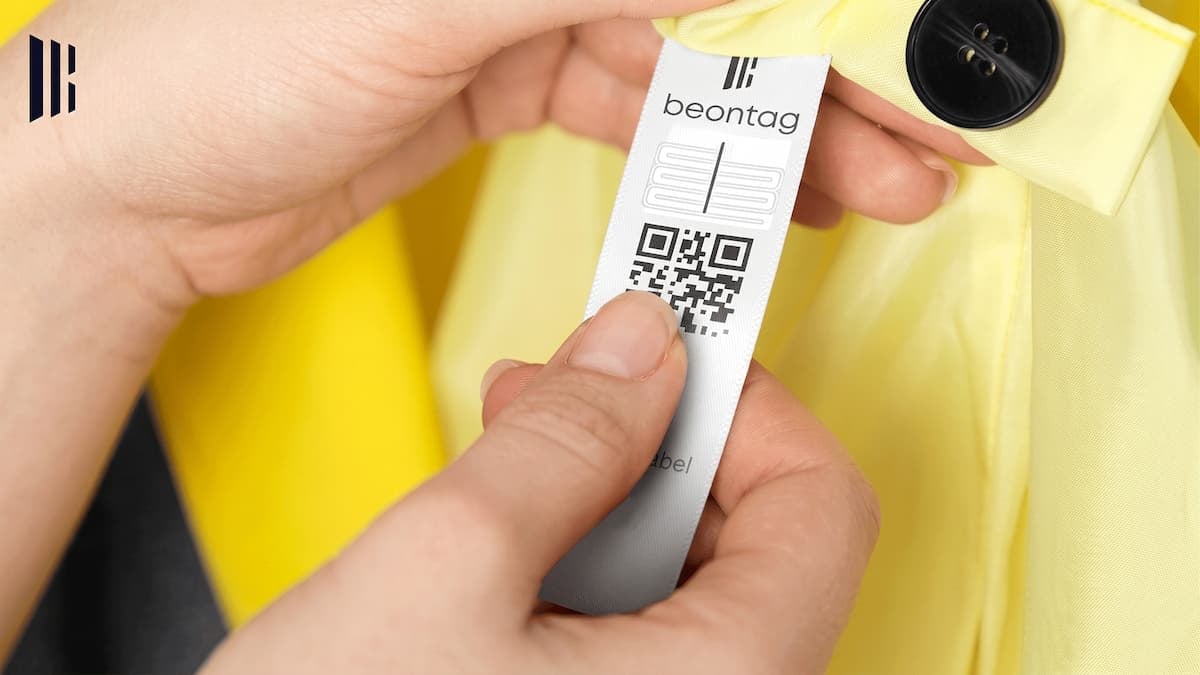
An embedded RFID care label is a textile label that integrates RFID technology directly into the fabric structure. Unlike external tags, this type of RFID care label becomes part of the garment, maintaining its original look and feel while enabling digital identification and tracking.
Fiberwave Soft is designed to function as a fully integrated textile label, combining traditional care label information with embedded RFID capabilities. This allows brands to maintain compliance with labeling requirements while adding digital functionality to each item.
By embedding RFID into the label, garments can be tracked at the item level throughout their lifecycle. This approach supports both operational efficiency and customer-facing applications without adding visible or rigid components to the product.
Traditional external RFID in apparel can create tension between functionality and garment design because they are physically visible and added on top of the product. This can interfere with the aesthetic finish and make the label noticeable to the consumer, which is not desirable in categories where clean design and premium perception are important, such as fashion and luxury apparel.
Durability is also a limitation. External labels such as hang tags are not exposed to washing, but they can be affected by friction and daily handling, which may gradually reduce readability. Over time, this can impact traceability consistency and compromise the reliability of item-level tracking across the product lifecycle.
From an operational perspective, external tagging introduces additional steps in production and logistics. This increases handling time and can create inconsistencies in application across large-scale manufacturing.
Fiberwave Soft is designed to function as an embedded RFID care label integrated directly into garments during manufacturing. Instead of being attached externally, this apparel RFID label becomes part of the textile structure, enabling identification without altering the look or feel of the product.
This solution operates through wireless data capture, allowing each item to be identified without line-of-sight. Supporting faster and more accurate tracking across production, logistics, and retail environments, improving visibility throughout the apparel supply chain.
Because it is compatible with standard manufacturing processes, Fiberwave Soft can be implemented without major changes to existing workflows.
Fiberwave Soft combines identification technology with a textile-first design, allowing brands to add traceability without affecting how garments look or feel. By being integrated into the fabric, it supports both operational efficiency and product quality across different stages of the apparel lifecycle.
This solution is built to perform under real apparel conditions, balancing durability, comfort, and scalability. The benefits below highlight how it improves manufacturing, tracking, and overall product experience without adding complexity to existing processes.
Fiberwave Soft is developed to preserve the natural softness of garments, avoiding the stiffness often associated with traditional tagging solutions. Because it is integrated into the fabric, it remains practically unnoticeable when worn.
Its flexible structure reduces the risk of irritation, especially in garments that are in direct contact with the skin. This makes it suitable for categories where comfort is a key requirement, such as everyday wear and premium apparel.
By maintaining the original feel of the garment, it allows brands to introduce tracking capabilities without negatively impacting the user experience, which is often a limitation in more rigid RFID tag formats.
One of the main advantages is the ability to be embedded directly into the garment during production. This removes the need for visible or additional components that could interfere with the final design.
Because it is part of the product from the beginning, there is no need for extra tagging steps later in the process. This helps maintain a clean finish and ensures consistency across large production volumes.
The result is a more discreet and integrated solution that aligns with brand expectations for both aesthetics and functionality.
This solution enables each garment to carry a unique identity, allowing it to be tracked individually throughout the supply chain. This improves visibility from manufacturing to retail, supporting more accurate inventory management.
With automated data capture, brands can reduce manual processes and minimize errors in stock control. Leading better decision-making and faster response to demand changes.
By connecting each item to a digital system, it becomes easier to monitor product movement and optimize operations across different channels.
Fiberwave Soft is designed to work within current production methods, making adoption more straightforward. It can be applied during standard manufacturing steps, without requiring major adjustments to workflows.
This reduces implementation time and avoids disruptions in production lines. Brands can introduce traceability features while maintaining speed and consistency, similar to how scalable solutions are applied in RAIN RFID environments.
Because it fits into existing infrastructure, it also supports scalability across different facilities and product categories.
Fiberwave can be adapted to meet different product and brand requirements, offering flexibility across various apparel categories. This allows companies to align the solution with their specific technical and design needs.
It can be applied to both basic and more complex garments, ensuring consistent performance regardless of the use case. This is especially relevant for brands operating across multiple segments.
With this level of adaptability, it becomes easier to scale traceability strategies while maintaining consistency in both functionality and product presentation, supporting diverse implementations similar to those seen across different RFID tag types and applications.
It can be applied across different apparel categories and operational contexts where traceability must work without compromising design or comfort.
Its embedded approach makes it suitable for both high-volume production and more demanding segments, supporting consistent identification throughout the product lifecycle.
As apparel operations become more data-driven, brands need reliable ways to connect physical products with digital systems. Embedded RFID supports this shift by integrating identification directly into the garment, ensuring that tracking remains consistent from production to retail without depending on external elements.
This approach improves data accuracy across the supply chain, since the identifier stays with the product throughout its lifecycle. It reduces the risk of loss or damage associated with external tags and supports better inventory visibility, faster processes, and more informed decision-making across operations.
By embedding identification into the garment itself, brands can scale traceability in a more stable and efficient way. Supporting a long-term operational improvement while aligning with the growing need for transparency and responsiveness in the fashion industry.
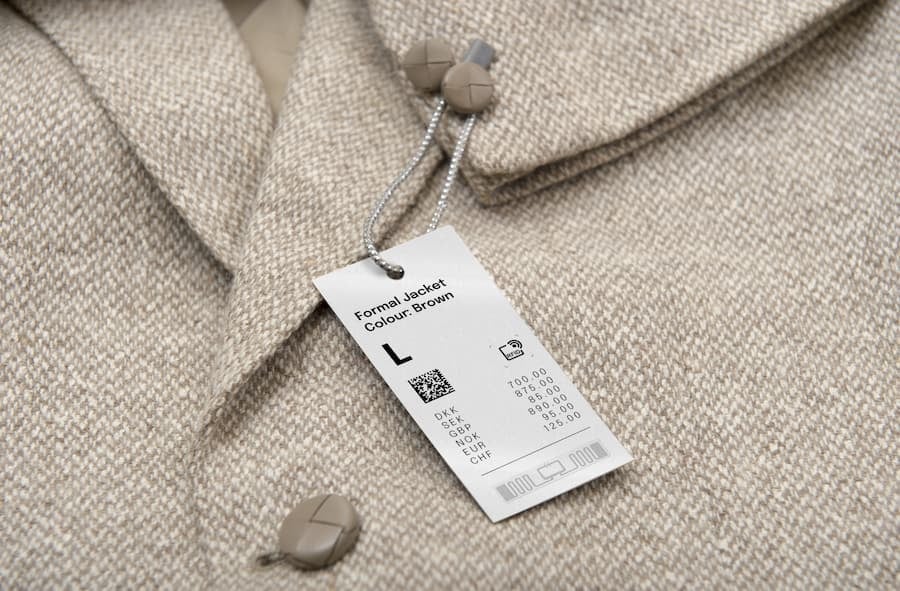
Digital Product Passport (DPP) initiatives are gaining space in apparel as a way to provide structured and accessible product information. DPP can be enabled by adding a QR code to the product label, allowing consumers to access digital information about the item.
While RFID supports internal tracking and operational visibility, the QR code connects the product to consumer-facing information, such as materials, origin, and care instructions. Each technology plays a different role within the same ecosystem.
By combining embedded identification with QR-based access, brands can improve both backend operations and front-end transparency. This creates a complete and more connected product journey, supporting regulatory requirements and evolving consumer expectations.
Fiberwave Soft shows how embedded identification can improve traceability without affecting garment design or comfort. By integrating this approach into apparel, brands can gain better control over inventory, streamline operations, and maintain product quality across different categories.
Beontag provides RFID solutions designed to support these needs, helping companies implement scalable and reliable identification systems. Its portfolio is focused on enabling efficient data capture and integration across complex supply chains.
To learn more about how embedded RFID care label solutions can support your apparel strategy, get in touch with Beontag and explore the full portfolio of technologies for the fashion and retail industry.