Stay up to date, subscribe to our newsletter!

Subscribe
Customer Log in GLM
Beontag

Graphics and Label Materials

Graphics and Label Materials

A wide range of labeling, self-adhesive, special papers, and other graphic and label materials

Learn more - Graphics and Label Materials

Resources

Image without altDatasheetsImage without altBrochuresImage without altStock and Trim Free Guide

Categories

See all - Categories

Pressure-sensitive adhesive - Categories
Prime Papers - Prime PapersVariable Info - Variable InfoDigital Variable Info - Digital Variable InfoFilms - FilmsSpecialty Beverage - Specialty BeverageSpecialty Papers & Films - Specialty Papers & Films
Paper Grades - Paper GradesFluorescents & Astrobrights - Fluorescents & AstrobrightsSpecialty Grades - Specialty GradesFilms & Foils - Films & Foils
Transfer-adhesive - Transfer-adhesive
Release Liner - CategoriesSustainable Products - Categories

Applications

See all - Applications

Health and Beauty Product - CategoriesLabel Materials for Cannabis Products - CategoriesLumber and Outdoor Tag Material - CategoriesBumper Sticker Products - CategoriesTextile and Garment Labels - CategoriesTight Mandrel - CategoriesTosca RPC Approved Labels - CategoriesSmall Office & Home Office Applications - CategoriesFood Packaging Tamper-Evident Label Products - Categories

RFID and IoT Enablers

RFID and IoT Enablers

A wide range of IoT enablers and smart tags, such as RFID, NFC and BLE, to connect billions of items worldwide.

Learn more - RFID and IoT Enablers

Resources

Image without altBrochures

Categories

See all - Categories

RFID and NFC Tags & Inlays - CategoriesBLE Tags - CategoriesSpecialty Labels - CategoriesOn Metal Labels - CategoriesHard Tags - CategoriesSustainable Products - Categories

Applications

See all - Applications

Inventory Management - CategoriesLogistics and Supply Chain - CategoriesMass Market - CategoriesBeauty and Personal Care - CategoriesAutomotive - CategoriesPayments - CategoriesSmart Cities - Categories

Applications

Personal and Home CareFood and BeverageHealthcare and PharmaceuticalSupply Chain and LogisticsMass Market and RetailIndustrial and Durable GoodsElectronic and ElectricalSee all applications

About us

About usESGCertifications & RecognitionsCareers

Newsroom

CasesPress ReleasesBlogBrochuresWhitepapers
Contact Us
Subscribe
Customer Log in GLM
Beontag
Graphic and Label MaterialsRFID and Iot Enablers

Beontag

About usESGCareersCertificationsCompliancePrivacy Policy

Newsroom

CasesPress ReleasesBlogBrochuresContact us

© 2026 All rights reserved.
Ubistart

Background blue shapeBackground blue shape

Change country/region?

You're viewing our available portfolio for

Our portfolio may vary depending on your location. Please choose the region or country according to where you are.

Change my country/region

How does RFID for loss prevention reduce retail shrink and improve store security?

Trotwood - US |Beontag |4/14/2026

RFID can be used for loss prevention because it reduces retail shrink and improves store security by enabling item-level visibility, automated exit control, and data-driven insights that detect loss events earlier and more accurately. See how RFID changes shrink management and how retailers can implement it effectively!


Background blue shapeBackground blue shape rotate-180

Explore more products that may interest you

Paper card to access controlline shape

RFID Sustainable Products

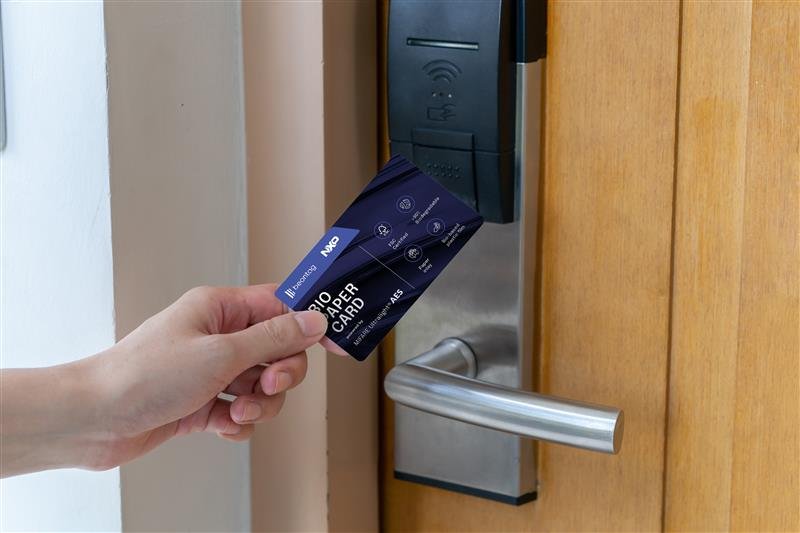
Bio Paper Card – HF NFC Sustainable Key Card for Access & EV Charging

NFC / Dimensions 85,5 x 54mm

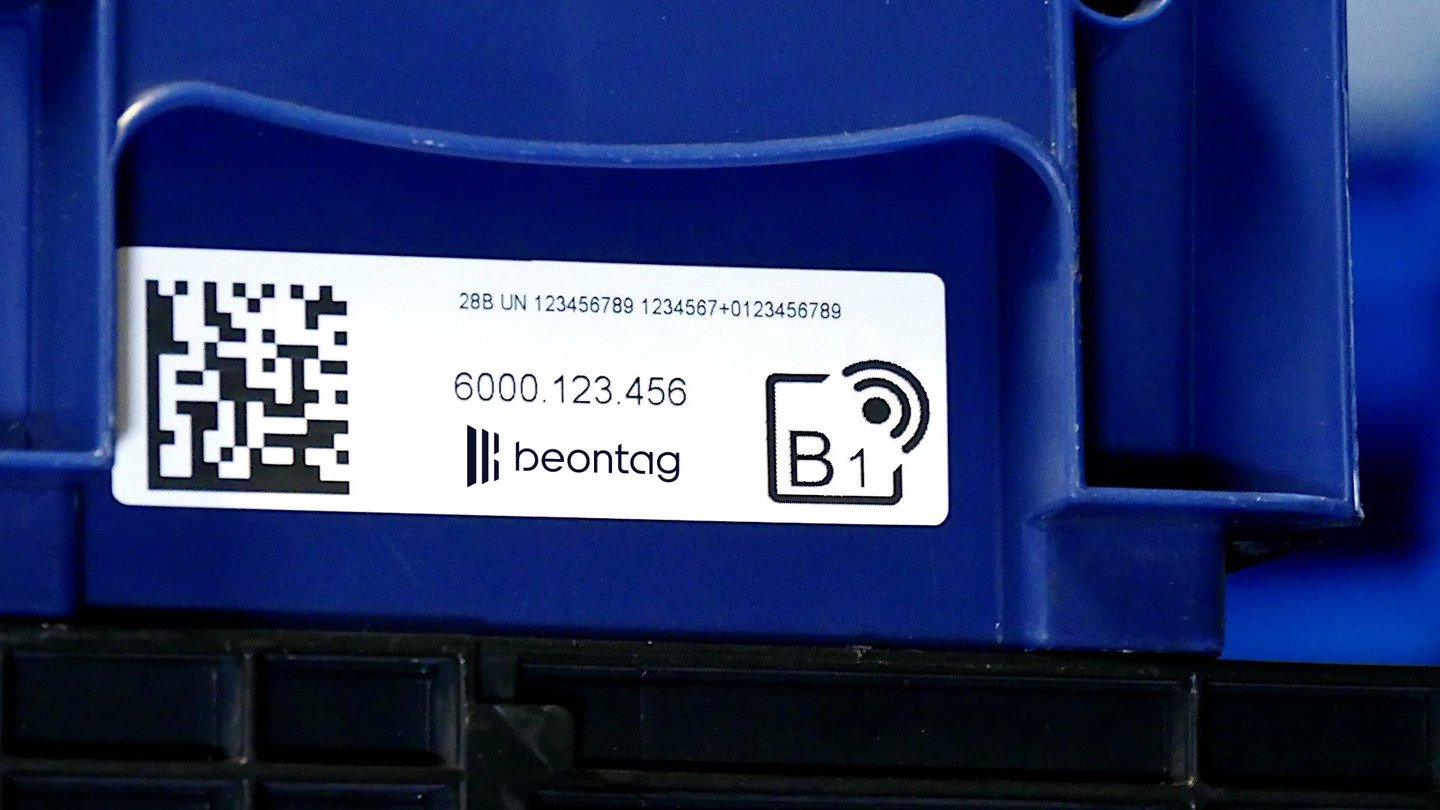
Beontag's Bio Paper Card is a sustainable, high-performance alternative for access control applications. This paper-based HF RFID card is ideal for limited-use tickets and key cards, offering a seamless user experience and reducing environmental impact compared to traditional plastic cards, while delivering the same levels of performance in terms of read range and reliability. Available also with NXP® Semiconductors MIFARE® DUOX for electric vehicle (EV) charging, ensuring security, quality and trust for authentication and payments at Charge Pint Operators (CPOs), E-Mobility Service Providers (EMSPs), and EVSE Equipment Providers.

See datasheet

Image without altline shape

Specialty RFID Labels

Carrier Dual - Dual Frequency UHF & NFC Tag for Logistics and Retail

Dual frequency / Antenna 33 x 67 mm

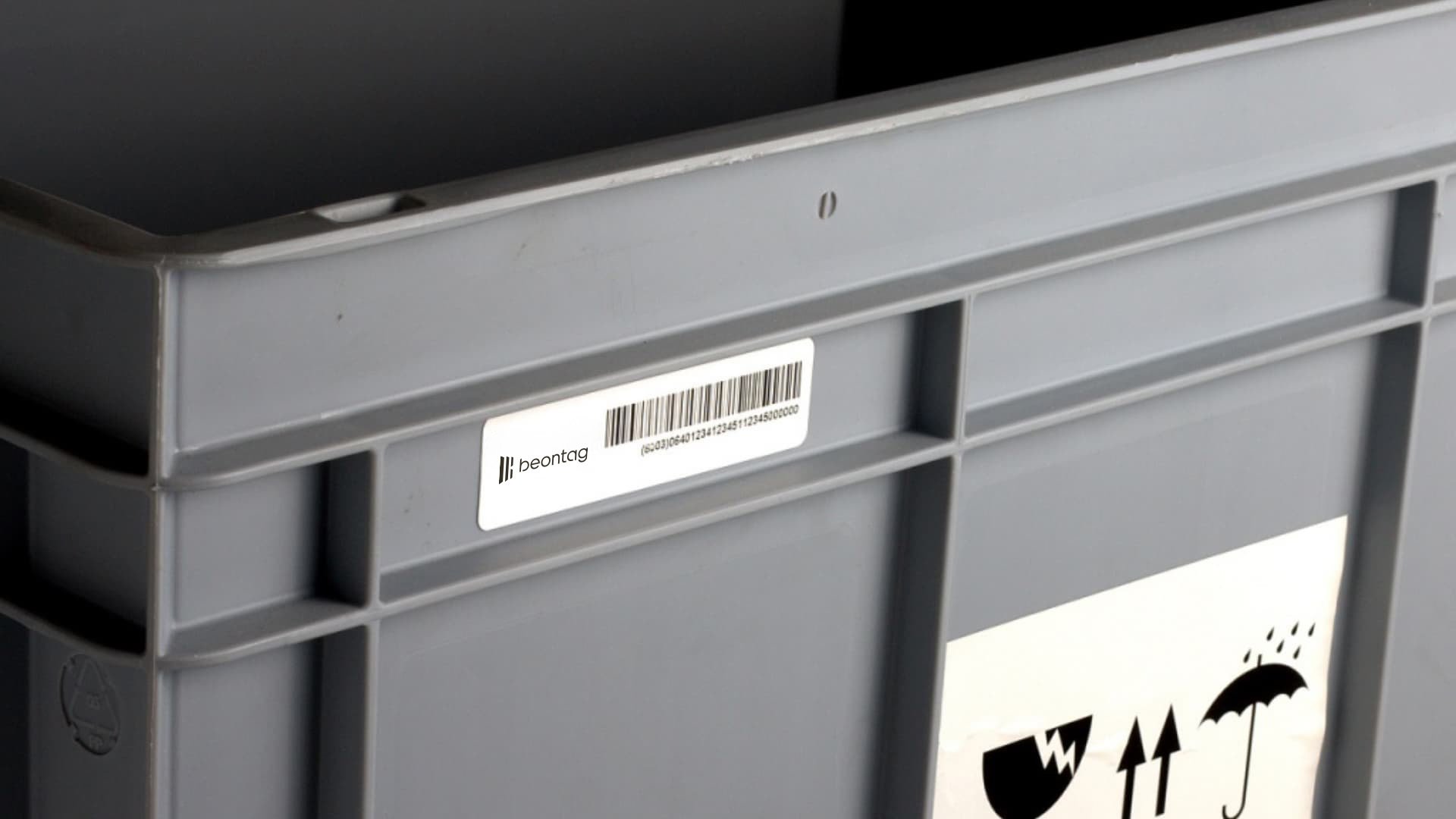
Best-in-class dual frequency product for RTIs and other applications that require the long-range RAIN RFID functionality for supply chain management and inventory counting but also NFC interface for consumer interaction at the point-of-delivery. Shared memory makes data handling easy via both interfaces.

See datasheet

microwave rfid tagline shape

Specialty RFID Labels

Carrier eWave - UHF RFID Label for Reusable Packaging and Microwave Resistance

UHF RFID / Antenna 38 x 10 mm

Carrier eWave is a washable, industrial-grade UHF label, compliant with microwave ovens, ideal for returnable and reusable food packaging applications, as it ensures circularity, asset management and supply chain processes while being safe and resistant.

See datasheet

Image without altline shape

Specialty RFID Labels

Carrier KLT – UHF RFID Label for Automotive Supply Chain (VDA 4500)

UHF RFID / Antenna 20 x 88 mm

Carrier KLT is a VDA 4500 compliant RFID label specifically designed for automotive industry applications. It is also available with optional protective layer for better printing durability and uses the same antenna design as Carrier PRO with proven performance.

See datasheet

Image without altline shape

Specialty RFID Labels

Carrier Pro – UHF RFID Tag for Asset Tracking and High Water Content Products

UHF RFID / Antenna 20 x 88 mm

Carrier Pro offers larger area for visual printing. Unique antenna design offers reliable tracking even when close to products that have high water content.

See datasheet

Image without altline shape

RFID Hard Tags

Carrier Tough Slim – Durable UHF RFID Hard Tag for Industrial Asset Tracking

UHF RFID / Dimensions 122 x 18 x 2 mm

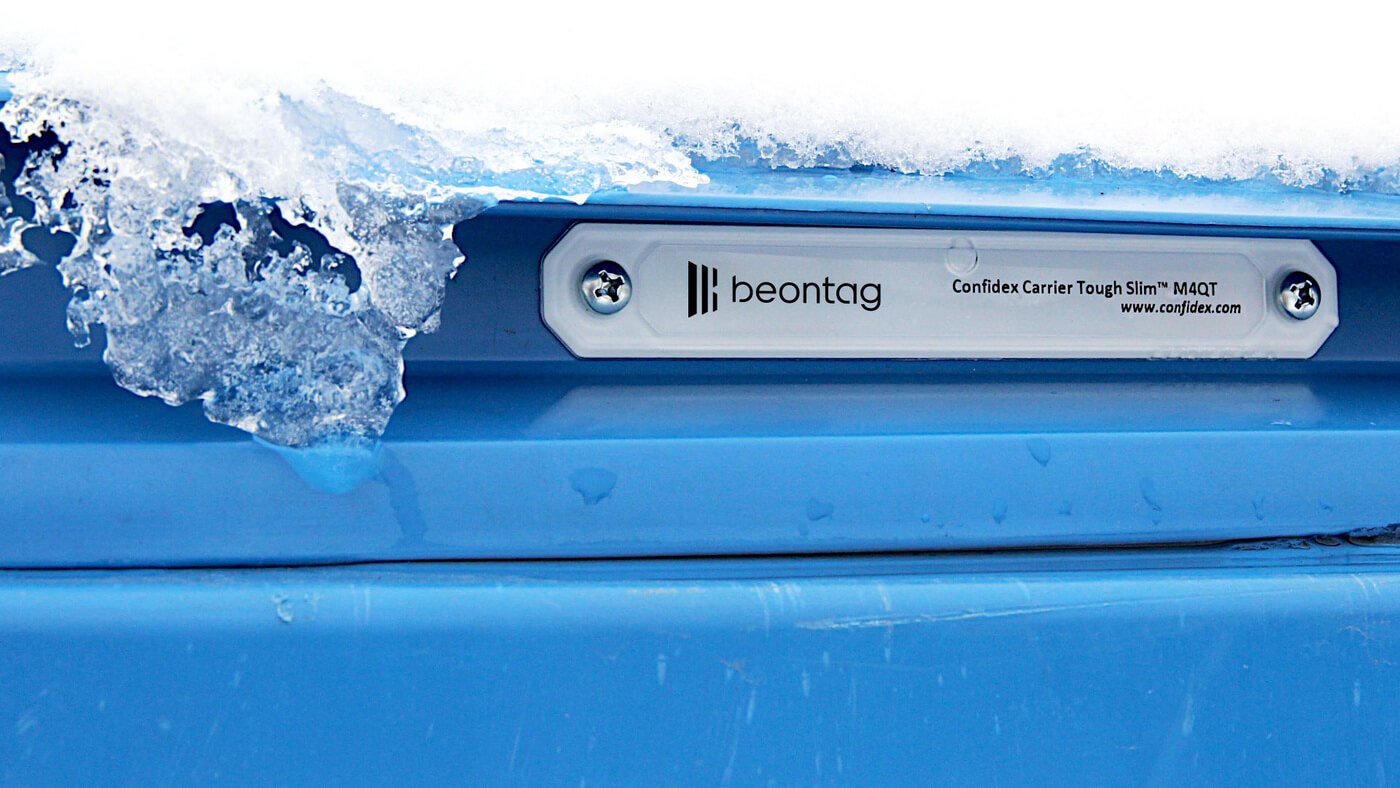
Designed for the harshest environments, Carrier Tough Slim provides you the robustness of hard tags with full personalization options.

See datasheet

Image without altline shape

RFID and NFC Tags & Inlays

Crosswave Neo – UHF RFID Tag with 360-Degree Readability Logistics and Supply Chain

UHF RFID / Antenna 46,5 x 72 mm

Unique dual-dipole behavior combined with performance of the latest IC generation. 360-degree readability offers reliable and fast logistics even in challenging environments.

See datasheet

Image without altline shape

Specialty RFID Labels

Cruiser Headlamp – Transparent UHF RFID Tag for Automotive and Vehicle Tracking

UHF RFID / Antenna 8,5 x 87 mm

Transparent and small Cruiser Headlamp label is an excellent choice for headlamp use in cars and motorcycles. All its materials are tested against chemicals, high temperatures and UV light. Its infrared protection guarantees optimal performance.

See datasheet

Image without altline shape

Specialty RFID Labels

Cruiser Windshield Crypto – UHF RFID Tag with Encryption for Vehicle Identification

UHF RFID / Antenna 11 x 93 mm

Cruiser Windshield Crypto label enables fast and secure transactions with its encryption feature. The data encryption prevents frauds while the IC's fast readability is maintained at the same time. Long reading distance and durable materials make sure traffic flow is not interrupted.

See datasheet

Image without altline shape

Specialty RFID Labels

Cruiser Windshield – Tamper-Evident UHF RFID Label for Fast Vehicle Identification

UHF RFID / Antenna 88 x 20 mm

Cruiser Windshield label offers full customization and encoding options with tamper-evident security. The label is especially designed for fast and reliable vehicle identification.

See datasheet

Image without altline shape

Specialty RFID Labels

Eclipse – Compact NFC RFID Tag for Retail and Anti-Counterfeiting

NFC / Antenna 21,75 x 11,85 mm

Eclipse are compact tags designed to meet the specific demands of retailers. The small size makes them the ideal choice for retail and apparel applications that leverage NFC technology for customer experience, authentication, and anti-counterfeiting applications. These tags come with additional protection features such as memory with security mechanisms and 3 pass mutual authenticarion process, to ensure privacy of users' data during interactions

See datasheet

Image without altline shape

RFID Sustainable Products

RFID and NFC Tags & Inlays

ECO Bale - Sustainable UHF RFID Tag for Pulp Bales

UHF RFID / Antenna 94 x 24 mm

ECO Bale is designed and optimized for tagging pulp bales and complies with the special requirements of the pulping process. ECO Bale enables end-to-end traceability until the bale, with the tag included, enters the papermaking process and dissolves.

See datasheet

Retail loss prevention has moved far beyond visible tags and manual checks. Shrink continues to grow in value and complexity, driven by organized retail crime, operational blind spots, and omnichannel pressure. Traditional tools struggle to keep pace with faster inventory flows and evolving thieves across physical and digital stores. 

Retailers now face a dual challenge: protecting inventory while preserving a positive customer experience. Overly aggressive security measures can hurt sales and brand perception, while weak controls expose stores to financial loss and safety risks. This tension makes shrink harder to manage than ever before. 

When RFID is used for loss prevention, it offers a different path. By connecting each item to real-time data, RFID shifts shrink management from reactive investigation to proactive control. Keep reading to understand how RFID works, where it delivers the most value, and how to build a scalable strategy.

Store employee in a clothing shop using a tablet for inventory management and RFID for loss prevention, surrounded by racks of dress shirts with a mannequin in the background.

What is retail shrink, and why is it harder to control now? 

Retail shrink is the loss of inventory value due to theft, errors, damage, or fraud, and it has become harder to control as retail operations grow more complex. Today, shrink extends beyond shoplifting to include organized crime, process failures, and omnichannel inconsistencies. 

The challenge has intensified as stores handle higher inventory velocity, self-service models, and blended fulfillment. According to industry research, rising theft-related violence and operational pressure are forcing retailers to rethink how shrink is detected, prevented, and measured across the entire store lifecycle. 

Shrink basics 

Shrink refers to the gap between recorded inventory and actual physical stock. It typically includes external theft, internal theft, administrative errors, and supplier fraud. While simple in definition, shrink becomes difficult to isolate when inventory moves frequently between stores, backrooms, and fulfillment processes. 

Without accurate item-level data, shrink often remains hidden until periodic audits. This delay limits prevention and increases financial exposure, especially in high-volume retail environments. 

Theft mix 

The theft mix has evolved significantly in recent years. Retailers now face a combination of opportunistic shoplifting and organized retail crime, often involving coordinated groups targeting specific products. 

This changing theft landscape makes traditional visual deterrents less effective. Loss prevention teams need deeper visibility into when, where, and how items leave the store without authorization. 

Process losses 

Not all shrink is theft. Process losses include mispicks, misreceipts, inaccurate counts, and poor returns handling. These losses accumulate quietly and are often misclassified as theft. 

As operations scale, manual controls struggle to keep pace. Process losses increasingly require automated identification to be detected and corrected early. 

Safety risks 

Shrink is no longer only a financial issue. Rising theft-related incidents have increased safety risks for employees and customers. Confrontational situations put frontline staff under pressure. 

Reducing shrink through better visibility helps shift loss prevention away from physical confrontation toward data-driven, safer intervention models. 

What is RFID for loss prevention in retail? 

When RFID is used for loss prevention we are talking about the use of item-level RFID identification to detect, analyze, and reduce inventory loss across store operations. Instead of relying solely on alarms, RFID connects item identity, location, and transaction status into a single data layer. 

By enabling continuous visibility, RFID supports loss prevention strategies that are preventive rather than reactive. Retailers gain the ability to understand loss patterns, optimize controls, and reduce shrinks without compromising customer experience. 

RAIN RFID 

RAIN RFID is the most widely used standard for retail loss prevention applications. It allows items to be read automatically and on scale, without line of sight, making it suitable for exits, sales floors, and backrooms. 

RAIN RFID enables fast reads across multiple items simultaneously, which is critical for real-time loss detection in dynamic retail environments. 

EPC identity 

Each RFID tag carries an Electronic Product Code (EPC), a unique digital identity assigned to a specific item. This identity is the foundation of RFID-based loss prevention. 

With EPC identity, retailers can distinguish between identical products and track each item’s journey, supporting precise loss analysis instead of category-level assumptions. 

Source tagging 

Source tagging means RFID tags are applied during manufacturing or packaging rather than in-store. This ensures consistent tag placement and data quality from the start. 

Source tagging improves loss prevention by enabling protection and visibility from the moment items arrive, reducing gaps that often occur during manual tagging processes. 

Store visibility 

RFID creates continuous store visibility by showing where items are and where they should be. This visibility supports both loss prevention and operational efficiency. 

When inventory status is always known, unexplained losses become easier to detect, investigate, and prevent systematically. 

How does RFID support exit control to reduce inventory loss? 

RFID supports exit control by automatically identifying items as they move through store exits and comparing their status against transaction data. This allows retailers to detect unauthorized removals with higher accuracy than traditional systems. 

Instead of relying only on presence-based alarms, RFID-driven exit control adds context. It understands which item is leaving, whether it was sold, and how it moved through the store. 

Exit reads 

Exit reads use RFID readers and antennas positioned at store exits to capture item identities in real time. These reads occur automatically as items pass through the exit zone. 

Because RFID does not require line of sight, multiple items can be detected simultaneously, improving reliability compared to traditional alarm systems. 

Alarm logic 

RFID enables smarter alarm logic by combining EPC identity with business rules. Alarms can trigger only when an item exits without a valid transaction. This reduces false alarms, which improves staff trust in the system and preserves customer experience. 

POS status 

By integrating with point-of-sale systems, RFID checks whether an item’s EPC has been properly sold or deactivated. This connection closes a major gap in traditional loss prevention. POS-linked RFID ensures exit alerts are based on transaction reality, not just physical movement. 

Response workflows 

RFID-driven alerts support structured response workflows. Staff can receive clear information about the item involved, reducing uncertainty and escalation. These workflows help shift loss prevention toward calm, informed intervention instead of reactive confrontation. 

How does item-level RFID create shrink visibility beyond the doors? 

Item-level RFID creates shrink visibility throughout the store, not just at exits. It reveals how items move, dwell, and disappear across different zones and processes. 

This broader visibility helps retailers identify where shrink originates, enabling targeted prevention strategies instead of blanket controls. 

  • Zones: zones are defined areas within the store, such as sales floor sections or departments. RFID tracks item movement between zones so retailers can detect high-risk areas and adjust layout, staffing, or controls accordingly.
  • Fitting rooms: fitting rooms are common shrink hotspots. RFID identifies which items enter and exit fitting rooms, creating visibility into item handling. This data helps retailers distinguish between customer behavior and potential loss, improving prevention without invasive monitoring.
  • Backroom: the backroom is often a blind spot for shrinking. RFID tracks items as they move between receiving, storage, and the sales floor. This visibility reduces internal errors and helps identify losses that occur outside customer-facing areas.
  • Returns: RFID improves returns handling by validating item identity and status. It ensures returned items match original inventory records. This reduces fraud and process errors, which are significant contributors to shrinking in omnichannel retail.
  • Analytics: analytics transform RFID reads into actionable insights. Patterns, exceptions, and trends highlight where shrink is likely to occur. These insights support continuous improvement rather than one-time investigations. 

What loss prevention use cases benefit most from RFID? 

RFID delivers the most value in loss prevention where inventory is high value, fast moving, or difficult to monitor visually. Certain retail categories benefit disproportionately from item-level visibility. 

By focusing RFID deployment on these use cases, retailers can maximize ROI and impact while building scalable foundations. 

Apparel 

Apparel benefits strongly from RFID due to high SKU counts and frequent handling. Item-level tracking reduces both theft and process losses. Improved visibility also supports fitting room management and faster replenishment. 

Footwear 

Footwear often faces organized theft and mismatched inventory issues. RFID tracks pairs accurately and improves exit detection. This reduces shrink while improving stock accuracy for popular sizes. 

Beauty 

Beauty products are small, valuable, and easy to conceal. RFID enhances detection and supports precise inventory control. Better visibility helps balance security with open merchandising. 

Electronics 

Electronics face high theft risk and complex returns. RFID supports item verification and exit control. This reduces fraud while protecting high-value inventory. 

Omnichannel 

Omnichannel operations amplify shrink risks through ship-from-store and returns. RFID connects physical and digital inventory views. This alignment reduces errors and improves loss accountability. 

What are the building blocks of an RFID loss prevention system? 

An RFID loss prevention system is built on a set of core components that work together to deliver item-level visibility, accurate detection, and actionable insights. Each building block plays a specific role in ensuring reliable performance and scalability. 

  • Tags: RFID tags store the unique digital identity of each item. Their design, materials, and placement directly impact read accuracy, durability, and compatibility with different products and retail environments.
  • Readers: RFID readers capture tag signals and convert them into data. Fixed readers are typically used at exits or zones, while handheld readers support inventory checks and investigations, enabling flexible loss prevention workflows.
  • Antennas: Antennas define where and how RFID signals are read. Proper antenna selection and positioning control read zones, minimize blind spots, and reduce false detections at store exits and internal areas.
  • Software: RFID software processes raw reads, applies business rules, and generates alerts, reports, and analytics. It transforms identification data into meaningful insights that support loss prevention decisions.
  • Integration: Integration connects RFID data with point-of-sale, inventory, and analytics systems. This ensures that exit alerts, inventory status, and loss signals reflect real transaction and operational conditions. 

What is the difference between RFID and EAS, and when should you use both? 

RFID and EAS serve different purposes in loss prevention. EAS focuses on deterrence, while RFID focuses on visibility and intelligence. 

Using both together can deliver stronger results than either alone, depending on the retail context. 

EAS limits 

EAS systems trigger alarms when tagged items exit, but they lack item identity. This limits analysis and creates false alarms. They provide deterrence but little diagnostic insight. 

RFID as EAS 

RFID can function as an alarm system while adding context. It knows which item triggered the alert and why. This reduces noise and improves response quality. 

EPC as EAS 

Using EPC identity as part of alarm logic enables precise control. Only unauthorized exits trigger alerts. This approach aligns loss prevention with transaction data. 

Hybrid setups 

Hybrid RFID and EAS setups combine deterrence with intelligence. Retailers gain immediate alerts and deeper insights. This model supports phased adoption and risk management. 

How do you implement RFID for loss prevention step by step? 

You implement RFID for loss prevention by following a structured sequence that connects item identity, store layout, and operational workflows. A step-by-step approach reduces risk, accelerates results, and ensures RFID data translates into effective shrink control. 

  1. Select the right categories: start with categories that have high shrink exposure, fast turnover, or complex handling. Limiting the initial scope helps validate results quickly and simplifies store adoption.
  2. Define the tag design: choose tag materials, antenna types, and placement based on real product conditions. Proper tag design ensures reliable reads at exits and inside the store.
  3. Set encoding rules: assign unique EPC identities and define serialization, validation, and data governance rules. Accurate encoding is essential for exit logic and analytics to work correctly.
  4. Configure store layout: design exit read zones and internal areas like backrooms or fitting rooms. Antenna placement and power settings should match traffic flow and physical constraints.
  5. Run a controlled pilot: test RFID performance, alarm accuracy, and staff response in live conditions. Use pilot data to fine-tune logic and workflows before scaling.
  6. Manage change and scale: train store teams, standardize response playbooks, and monitor performance continuously. Strong change management ensures consistent execution as RFID expands. 

How do you measure ROI and performance without guessing? 

You measure RFID loss prevention ROI by establishing clear baselines, tracking alert quality, and connecting RFID data to recovered value, labor efficiency, and inventory accuracy. Objective metrics replace assumptions and show whether RFID is reducing shrinking and improving store operations. 

Baselines 

Baselines define the reference point for evaluating RFID impact. Before deployment, retailers should document shrink rates, inventory accuracy, cycle count frequency, and loss-related labor hours by category and store. These metrics allow direct comparison after RFID activation and prevent overestimating results. 

Alarm quality 

Alarm quality measures how often RFID alerts reflect real loss events. Tracking false positives, true positives, and missed events helps retailers fine-tune read zones and logic. High-quality alarms improve staff trust, reduce unnecessary interventions, and directly impact operational efficiency and customer experience. 

Recovery value 

Recovery value quantifies the inventory value saved or recovered due to RFID-driven alerts and insights. This includes prevented exits, identified process failures, and faster issue resolution. Linking recovery value to EPC-level events creates a clear financial narrative for RFID investment justification. 

Labor impact 

Labor impact evaluates how RFID changes time spent on loss prevention activities. Metrics include reduced manual checks, faster investigations, and fewer unnecessary confrontations. By reallocating labor from reactive tasks to customer-facing activities, RFID contributes to measurable operational and financial benefits. 

Inventory uplift 

Inventory uplift captures improvements in inventory accuracy, availability, and sell-through enabled by RFID. Higher accuracy reduces phantom inventory, improves replenishment, and supports omnichannel fulfillment. This uplift connects loss prevention performance to revenue protection and sales growth, not only cost avoidance. 

Build smarter prevention foundations with Beontag’s RFID 

As retail shrink grows more complex, RFID for loss prevention provides the visibility and intelligence needed to respond effectively. Item-level identification transforms loss prevention from reactive control to proactive management. 

Reliable RFID performance starts with high-quality identification foundations. Beontag develops RFID and label solutions designed to support consistent reads, scalability, and integration across retail environments. 

Explore Beontag’s RFID portfolio of solutions and talk to our specialist team to learn how better identification enables safer stores, lower shrink, and smarter operations. 

Warehouse aisle with tall shelving full of boxed inventory, overlaid with the text “Explore Connected Solutions That Scale with You.”

You may also like to see

Pharmaceutical production line with vaccine vials moving through an automated filling machine, featuring self-adhesive labels applied to each container for clear identification and traceability.

What are self-adhesive (pressure-sensitive) labels and how do they work?

line shape
Blue capsule bottle and matching pharmaceutical box with self-adhesive labels, highlighting branded packaging for healthcare and supplement products.

Self-Adhesive Labels for Pharmaceuticals: Compliance, Safety, and Tracking

line shape
Close-up of a Beontag RAIN RFID hard tag mounted on a metal structure, showing an ID number and an electrical warning symbol.

Understanding RFID Hard Tags: Function, Benefits, and Selection

line shape
Pressure-sensitive adhesive how to choose: two cardboard shipping boxes with barcode labels and handling symbols on a clean studio background.

How to Choose the Right Pressure-Sensitive Adhesive for Your Label Printing

line shape
RFID in retail store associate scanning packaged goods on a grocery shelf with a handheld scanner for real-time inventory accuracy.

How RFID in retail works: From backroom blind spots to real-time shelf visibility

line shape
A close-up of a Beontag RFID hard tag mounted with screws on industrial equipment.

RFID Labels vs Hard Tags: What’s the Difference and Which Should You Choose?

line shape
Amber dropper bottle with a blue label resting on a wooden board against a pink background with shadow lines.

Hot Melt vs. Water-Based Adhesives: Which Is Right for Your Labels?

line shape
Car windshield with an RFID tag near the A-pillar, illustrating rfid read range for vehicle identification and access control.

What Really Affects RFID Read Range - and How to Improve It

line shape
Hand holding a bag of apples with a “100% natural product” sticker inside a refrigerator, highlighting labeling trends in food packaging and consumer transparency.

What labeling trends will shape pressure-sensitive adhesives for labels in 2026?

line shape
Woman in business attire at a supermarket self-checkout, holding an orange product package and looking at it beside payment terminals.

What RFID trends will shape retail, industry, and cities in 2026?

line shape
Glass-front convention center with flags and taxis outside, representing the venue and atmosphere of NRF 2026.

NRF 2026: How Beontag and Temera Are Leveling Up the Retail Experience

line shape
Beontag logo sticker on a white vehicle door, illustrating pressure-sensitive-adhesive labeling.

Understanding Pressure-Sensitive Adhesives: Properties, Types, and Uses

line shape