




What Is RFID Middleware? A Practical Guide for End-to-End RFID Visibility

Subscribe to our newsletter!Stay up to date, subscribe to our newsletter!
SubscribeRFID Access Control uses radio frequency identification to authenticate users and manage access to secure areas without physical keys. It improves security, convenience, and visibility through smart credentials and readers. Read on to learn how it works and its key benefits.


Modern organizations require more than traditional locks and mechanical keys to protect people, facilities, and sensitive assets. As workplaces become more connected and security requirements evolve, digital access management has become an important part of daily operations. Among the available technologies, RFID access control stands for combining convenience, automation, and reliable user identification.
Organizations must control permissions, record access events, integrate security with business systems, and quickly update user credentials when employees, visitors, or contractors change roles. Traditional key-based systems often make these processes difficult, costly, and time-consuming.
Understanding how RFID technology works helps organizations implement more secure and scalable access strategies. From RFID credentials and readers to software integration and reporting, this guide explains the technologies, benefits, and best practices behind modern systems.
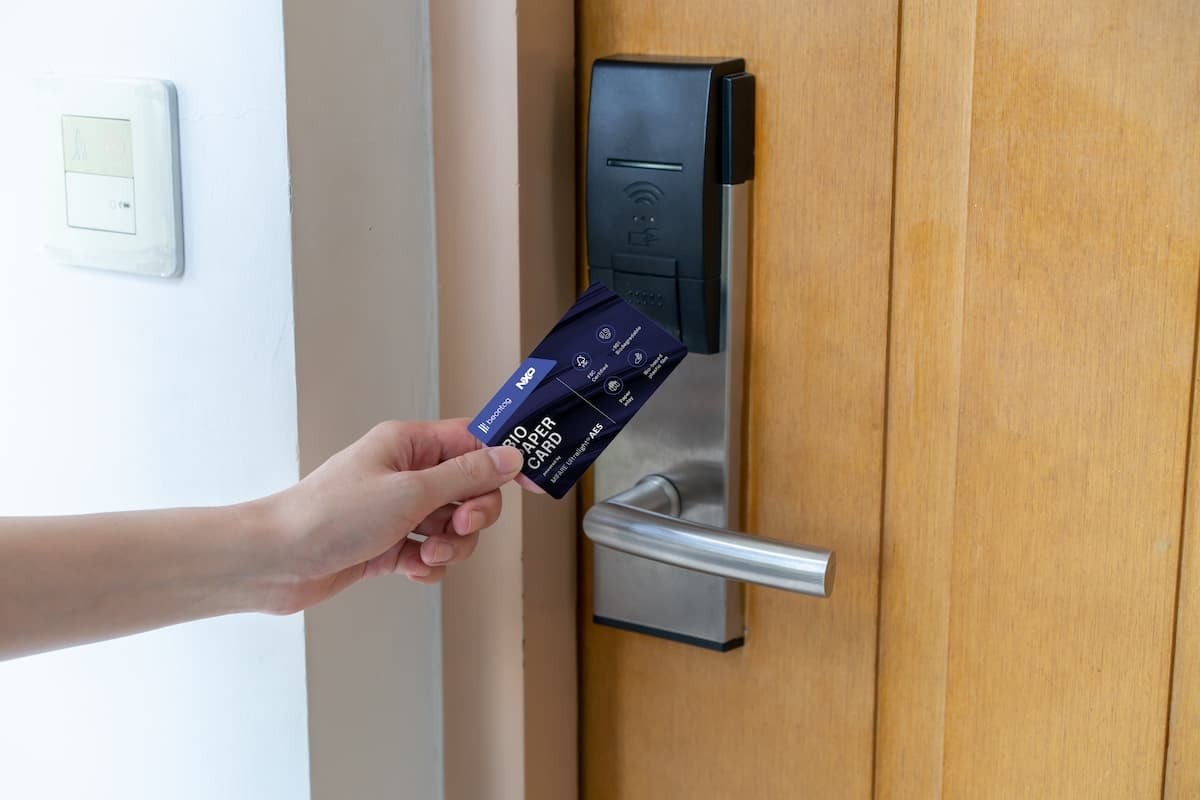
RFID access control is a security technology that uses radio frequency identification to authenticate users and manage access to physical spaces without traditional keys. Instead, authorized individuals present a credential, such as a card, key fob, or wearable, to a reader that verifies their identity before granting entry.
A control system combines credentials, readers, controllers, and management software to regulate who can enter specific areas and when. Because permissions are managed digitally, administrators can quickly update or revoke access rights without replacing locks or issuing new keys.
Compared with conventional locking methods, RFID door access improves convenience, security, and operational efficiency. It also records every access event, giving organizations valuable visibility into facility usage while supporting compliance, incident investigations, and centralized security management.
An access control system uses radio waves to exchange information between a credential and an RFID reader. When a user presents an authorized credential, the reader captures its unique identifier and sends it to the control system for verification. If the credential matches the stored permissions, access is granted within seconds.
Because authentication happens automatically and without physical contact, RFID technology enables fast, reliable, and convenient entry while reducing wear associated with traditional keys or magnetic stripe cards. The process can also integrate with security software, visitor management platforms, and building automation systems.
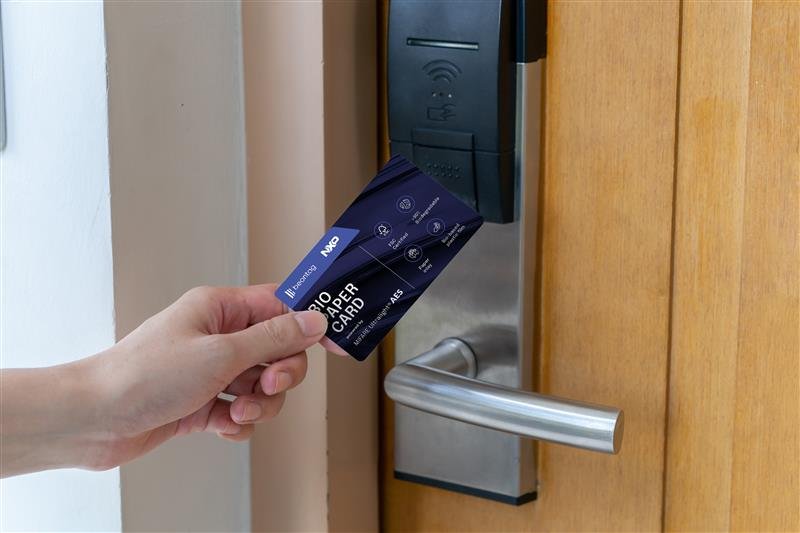
RFID credentials come in different formats to suit a variety of environments and user needs. Access cards remain the most common option for offices, schools, and healthcare facilities because they are easy to issue, replace, and combine with visual identification. In suitable contactless systems, NFC access cards can also provide a compact credential format for secure entry.
Key fobs provide a compact alternative for residential buildings, parking facilities, and gyms, while RFID-enabled wristbands and wearables are popular in hospitals, leisure venues and for contactless access at events, where hands-free identification improves convenience.
An RFID card reader receives the credential's identifier and forwards it to the access control software or central database. The system compares the information with stored permissions, verifies whether access is allowed, and immediately sends a command to unlock the door or deny entry.
Beyond granting access, the database records every event, including the user, location, and time of each interaction. These records help organizations monitor facility usage, generate audit reports, investigate incidents, and manage permissions efficiently across one or multiple locations.
Different RFID technologies are available for access control, each designed to meet specific operational requirements. The main distinction is how the credential is powered, which directly affects read range, cost, and the most suitable applications.
Passive RFID credentials do not contain an internal battery. Instead, they are powered by the electromagnetic field generated by the RFID card reader during the authentication process. Depending on the credential design, passive HF RFID inlays can be incorporated into cards and other contactless formats. This battery-free construction makes them compact, durable, and cost-effective.
Because they operate over short distances, passive RFID credentials are recommended for RFID door access, where users intentionally present a card, key fob, or wearable to the reader. They are widely used in offices, hospitals, schools, hotels, residential buildings, and other facilities that require secure, controlled entry.
Active RFID credentials include an internal battery that allows them to transmit signals over much greater distances than passive alternatives. Instead of requiring proximity to a reader, they can be detected automatically, making them suitable for specialized access control applications.
These systems are commonly deployed in industrial facilities, logistics yards, parking areas, and high-security sites where vehicles or personnel need hands-free identification. Although active RFID solutions generally involve higher costs and battery maintenance, they provide extended read ranges and greater flexibility for long-distance detection.
Organizations implement access control to strengthen security while making access management more efficient. Beyond replacing traditional keys, these systems improve user experience, increase visibility into facility activity, and support long-term operational growth.
RFID access can be adapted to a wide range of environments, from corporate offices to highly regulated facilities. Because permissions are managed digitally, organizations can improve security while tailoring access rules to the specific needs of each industry.
Choosing the right RFID access control system involves balancing security, usability, and scalability. Evaluating your organization's operational needs before deployment helps ensure the solution delivers reliable performance today while remaining flexible enough to support future growth.
Start by identifying which areas require controlled access, how many users will need credentials, and the level of security for each location demands. Different spaces often require different permission levels, making it important to define access policies before selecting hardware or software.
Choose credentials based on how users interact with the system. RFID cards are common in offices and educational institutions, while key fobs, wristbands, and other wearables may offer greater convenience in residential, healthcare, or hospitality environments. Durability and replacement costs should also be considered.
Reader placement, read range, door hardware, and environmental conditions all influence system performance. Facilities with metal structures, outdoor entrances, or specialized access points may require different reader configurations to ensure reliable authentication and consistent operation.
An access control solution becomes more valuable when it integrates with existing business systems. Compatibility with HR platforms, visitor management software, surveillance systems, and building automation can simplify administration while reducing manual tasks and improving operational visibility.
A pilot implementation allows organizations to validate reader performance, credential reliability, and user workflows before expanding across the entire facility. Testing under real operating conditions helps identify potential issues early and reduces the risk of costly adjustments after installation.
Successful implementation depends on more than the technology itself. Administrators should understand how to manage permissions, issue credentials, and monitor system activity, while end users should receive clear guidance on credential usage and security best practices.
Whether you're securing a corporate office, healthcare facility, educational campus, or industrial site, the right RFID solution starts with reliable, high-performance credentials. Beontag offers a comprehensive portfolio of RFID and NFC products designed to support secure access, seamless user experiences, and scalable identity management across a wide range of applications.
With expertise in smart identification technologies, Beontag develops RFID cards, inlays, labels, and NFC solutions that integrate with modern access control systems while meeting the performance, durability, and security requirements of demanding environments.
Explore Beontag's RFID and NFC portfolio or contact our specialists to find the right access control solution for your organization.